Treadmill With Incline: What You Need to Know Before You Buy
Walking uphill is harder than walking on flat ground. A treadmill with incline brings that effect indoors, so you can raise your heart rate without running faster or pounding your joints.
But “incline” on a spec sheet can mean very different things. One machine tops out at 10% and tilts by hand. Another reaches 40% with a motor built for it.
This guide explains how incline works, how much you need, what to check before buying, and how to train safely. It also covers gyms, hotels, and studios.
What Is a Treadmill With Incline?
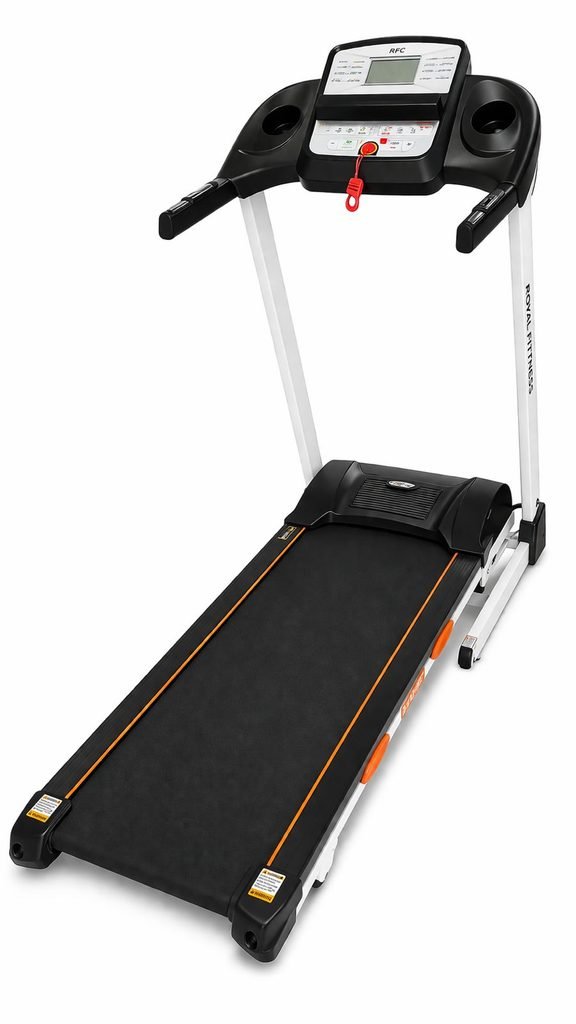
A treadmill with incline raises the front of the running deck so you walk or run uphill. The slope increases effort, heart rate, and work for the glutes, hamstrings, and calves without needing a faster pace.
You may also see it called an incline treadmill, auto incline treadmill, motorized incline treadmill, or hill-climb treadmill with incline. Machines built mainly for steep walking are often sold as incline trainers.
How Treadmill With Incline Works
Percent grade vs. degrees
Treadmills show percent grade, not degrees. A 10% grade means the deck rises 10 units for every 100 units of forward travel.
That works out to roughly 5.7 degrees. Percent figures look small, but they feel steep underfoot.
| Incline (grade) | Approx. angle | What it feels like |
| 1% | 0.6° | Matches flat outdoor effort for many runners |
| 5% | 2.9° | Gentle hill |
| 10% | 5.7° | Clear uphill; heart rate climbs quickly |
| 12% | 6.8° | Demanding for beginners |
| 15% | 8.5° | Steep hill walking |
| 20% | 11.3° | Very steep; slow walking pace |
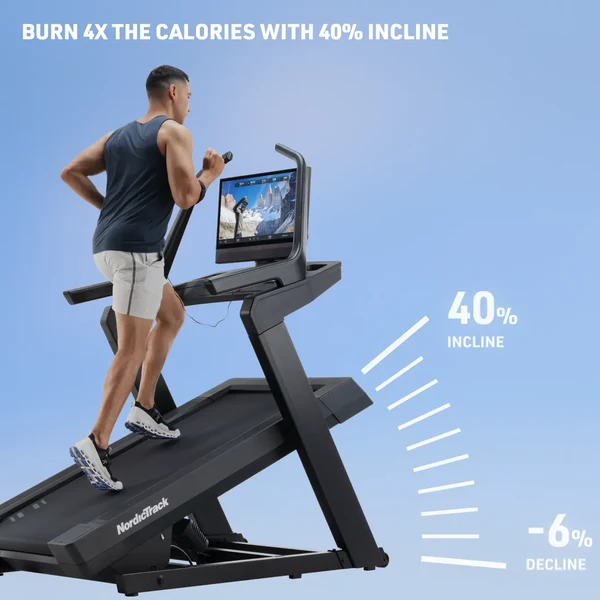
| 40% | 21.8° | Extreme; specialist incline trainers only |
What happens inside the machine
When you pick a grade, a separate incline motor (also called an elevation motor) lifts the front of the deck. The drive motor keeps the belt turning at your chosen speed.
That means treadmill with incline adds a second motor, a second set of wear points, and a second thing that can need calibration.
What Does Incline Actually Do for Your Workout?
Incline raises effort at any given speed. It also shifts more work to the posterior chain, meaning the glutes, hamstrings, and calves, and increases ankle range of motion.
Here is what the research says, without the hype.
- The 1% rule. Classic 1990s research found that a 1% grade roughly offsets the missing air resistance of outdoor running. Many runners use it as a baseline for treadmill sessions.
- Higher grades and heart rate. A 2021 study found that walking at 10% and 16% grades targeted heart rate and full-body muscle use better than flat walking.
- Incline walking vs. running. A 2025 study in the International Journal of Exercise Science compared the 12-3-30 workout with running in 16 young adults. Incline walking drew a larger share of its energy from fat, about 41% versus 33%. But running burned calories faster, around 13 per minute versus 10.
That last study was small, and it measured fuel use rather than long-term weight loss. Treat it as an interesting signal, not a verdict.
Bottom line: incline is a strong way to raise intensity with less impact. Consistency, diet, and total weekly activity still decide most results.
Auto Incline vs. Manual Incline
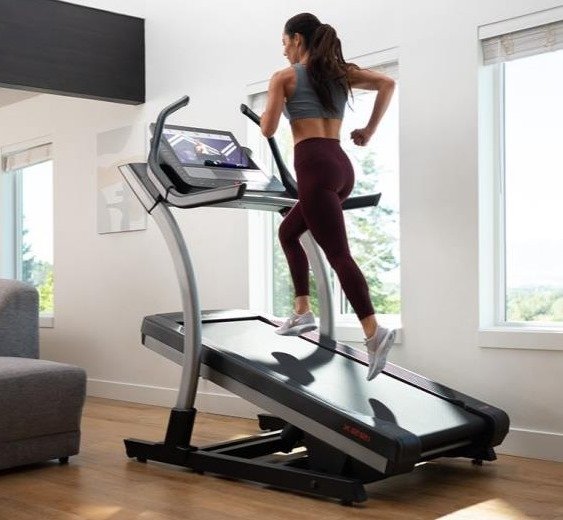
Manual incline means you stop the belt and adjust the angle by hand, often with a pin or lever. It is cheaper, but few people change it mid-workout, so most sessions stay at one setting.
Motorized (auto) incline lets you change the grade with a button, a handrail toggle, or a program. It is the right choice for hill intervals and progressive training.
| Feature | Manual incline | Auto incline |
| Changing grade | Stop and adjust | One touch, mid-workout |
| Interval training | Awkward | Easy |
| Typical range | Low (often 3 positions up to ~10–16%) | 10–20%, up to 40% on specialist models |
| Price | Lower | Higher |
| Failure points | Fewer | Extra motor and sensors |
If you plan to do anything beyond casual walking, choose auto incline.
How Much Treadmill with Incline Do You Really Need?
Most people never use the maximum grade on their machine. Match the range to your goal.
Casual walking and general fitness: 0–10% is plenty.
Regular jogging and mixed workouts: 0–12% or 0–15%.
Hill training, trail running, or hiking prep: 15% or more, ideally with decline.
Steep-grade walking specialists: 20–40% on a dedicated incline trainer.
Beyond 15%, speed drops sharply and the motor, frame, and your Achilles tendons all work harder. A 40% machine, such as the NordicTrack X22i, is exciting but only worth it if you will use that range.
Walking pads vs. full treadmills
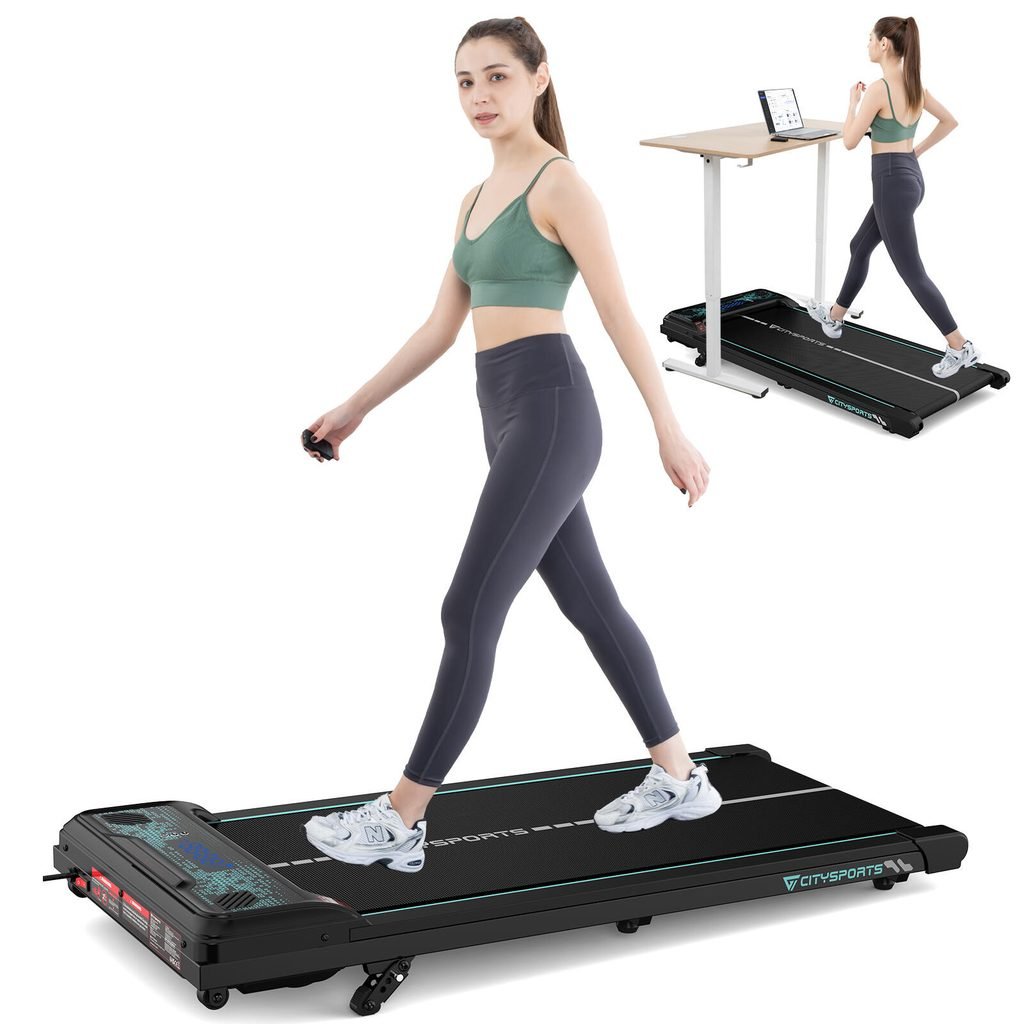
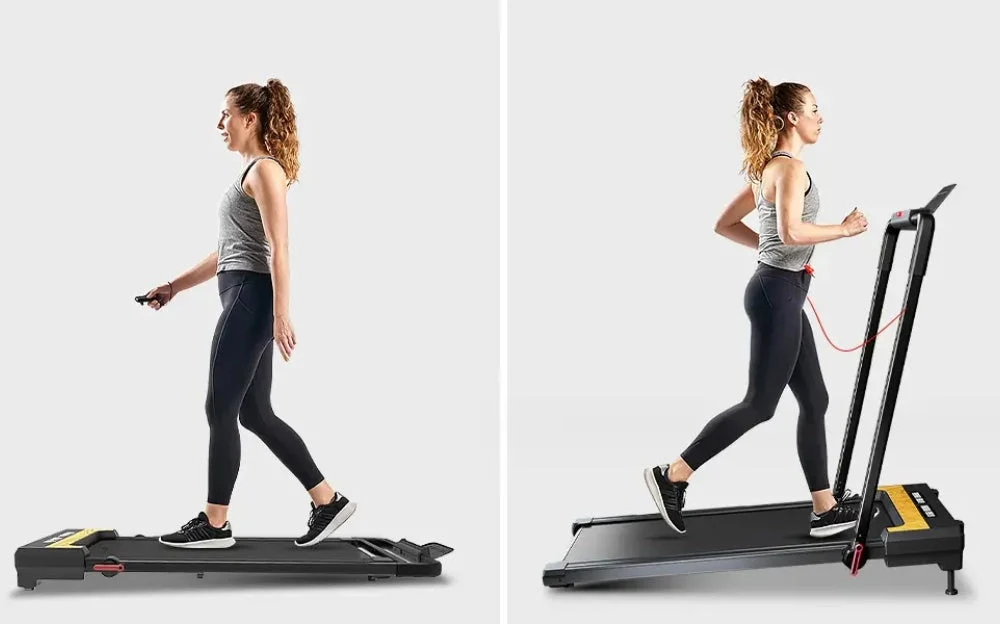
Many compact walking pads advertise 10% or more, and some compact models list up to 20%. They can work well for light walking in small spaces.
But they typically have shorter belts, smaller motors, and lower weight limits. Compare them with full treadmills only on a like-for-like basis, not against specs built for running.
Do you need decline?
Decline simulates downhill, which loads the quads and prepares you for hiking descents. Some models, like the SOLE F85 with six decline levels and a 4.0 HP motor, offer both. If you hike or trail run, decline is worth paying for.
The Specs That Matter Most
Motor: continuous horsepower (CHP), not peak HP
Peak HP is a short-burst rating and is often inflated. CHP (continuous-duty horsepower) shows what the motor can sustain.
Incline raises motor load because it works against gravity. Heavier users raise it further. If you plan to run or train at steep grades, or the machine will be shared, a stronger motor is the safer choice.
- Walking and light jogging: about 2.0–2.5 CHP
- Regular running or shared family use: about 2.5–3.0+ CHP
- Heavy daily use: continuous-duty commercial motor
Be careful with products that list only “HP” with no “continuous” label.
Belt and deck size
Your stride decides this. Walkers can manage around 20″ × 50–55″. Runners should look for 20″ × 55–60″ or longer. Taller users need extra length.
Cushioning
Adjustable or zoned shock absorption reduces joint load. It helps most if you run or have sensitive knees, but a very soft deck can make incline walking feel unstable.
Weight capacity
Choose a limit at least 20% above the heaviest user. For users over 300 lb, look for heavier frames, higher stated capacities, and strong motors.
Frame, noise, and floor protection
A sturdy frame wobbles less at speed and at steep grades. For upstairs rooms or apartments, test noise, add a mat, and check that the floor can handle the weight and vibration.
Folding vs. non-folding
Folding models save space and suit small homes. Non-folding models are usually more stable and last longer under heavy use.
Console, Apps, and Subscriptions
Some treadmills with incilne, such as many NordicTrack models, are built around the iFIT platform, which can adjust incline and speed automatically to follow a trainer. Others pair with apps such as Zwift over Bluetooth, and streaming platforms like Apple Fitness+ can guide a workout on almost any machine.
Check what works without a subscription. A good console shows speed, grade, time, and heart rate, and runs preset programs even if you never pay for a membership.
What a Treadmill With Incline Costs
Prices vary by market, season, and retailer, so think in tiers instead of fixed numbers.
| Tier | What you usually get | Watch for |
| Entry | Compact frame, modest motor, 10–12% incline | Shorter belts, lower weight limits, short warranties |
| Mid-range | 2.5–3.0 CHP, 12–15% auto incline, better cushioning | Subscription upsells |
| Premium | Large motor, 15–40% incline, decline, big console | Higher repair costs if out of warranty |
| Commercial | Continuous-duty motor, heavy frame, service contracts | Higher upfront cost; built for daily use |
For a sense of scale, the non-folding SOLE TT8 was listed around $2,599 at the time of writing.
Total cost of ownership
The sticker price is only part of the cost. Plan for belt lubrication or replacement, electricity, possible subscription fees, delivery, and repairs after warranty. A slightly higher upfront price often reduces long-term cost.
Incline Workouts That Work
Warm up on flat or low grade for five minutes before every session. Use heart-rate zones or RPE (rating of perceived exertion) to judge effort. You should be able to speak in short sentences during steady work.
Beginner: steady incline walk (20–30 minutes)
1.Warm up 5 minutes at 0–1%.
2.Walk 15–20 minutes at 3–6%.
3.Cool down 5 minutes at 0%.
Intermediate: hill intervals (30 minutes)
Warm up 5 minutes.
Alternate 2 minutes at 6–8% with 2 minutes at 1–2%. Repeat five times.
Cool down 5 minutes.
Advanced: pyramid climb
Raise the grade by 1% each minute up to your limit, then step back down. Some people also borrow the “Japanese walking” idea of alternating fast and slow intervals and apply it with incline.
The 12-3-30 workout: an honest look
It is simple: 12% incline, 3 mph, 30 minutes. It went viral online, and the single study that tested it, described above, found real fuel-use benefits but a lower calorie burn per minute than running.
Nothing about 12-3-30 is magic. For beginners, 12% can be too steep, so build up gradually.
Decline and hiking prep
If your machine has decline, add short downhill blocks of 1–3 minutes after climbs. Keep them gentle at first, because downhill work stresses the quads and knees in a different way.
Is Incline Training Safe?
Incline is generally lower impact than running, but steep grades load the calves and Achilles tendons harder. Ramping up too fast is the most common mistake.
- Increase grade in small steps of 0.5–1% across several sessions.
- Keep an upright posture and avoid leaning forward.
- Do not hold the handrails to take weight off. It reduces the workout and can distort posture.
- Always attach the safety key.
- Stop if you feel chest pain, dizziness, or sharp joint pain.
People with heart, blood pressure, or joint conditions should get medical advice first. That includes older adults and anyone returning from an injury.
Calibration, Maintenance, and Troubleshooting
Most problems are preventable with basic care.
- Wipe the belt and deck after use.
- Lubricate the belt as the manual instructs.
- Check belt alignment and tension.
- Vacuum under the machine to prevent dust build-up.
- Inspect the power cord.
If the treadmill with incline is not working or shows a calibration error, follow this order:
1.Stop and power the machine off, then restart it.
2.Look for a calibration or reset routine in the settings or service menu and follow the manual.
3.Check that nothing is blocking the lift mechanism.
4.If the error returns, contact the seller or a technician rather than forcing it.
Never override a fault by hand while the machine is plugged in.
Buying for a Gym, Hotel, or Studio
Commercial buyers face different priorities. Daily use runs the motors for hours, so a commercial-grade, continuous-duty motor and a heavy frame matter more than console features.
Look for compliance with ISO 20957 / EN 957 (stationary training equipment) and electrical marks such as CE or UL where they apply. Ask suppliers about on-site service, spare-parts stock, response times, and written warranty terms.
For hotels, noise and a small footprint matter. For gyms and studios, plan for variety: several machines with different incline ranges serve more members than identical units. Brands such as Life Fitness, Precor, Technogym, and Matrix are common in this category, but compare service coverage in your area before price.
Finding Dealers, Delivery, and Service Near You
The best machine on paper is a poor purchase if no one can repair it. Before you buy, check:
- Is there a dealer or technician in your region?
- Are delivery and assembly included, especially for upper floors?
- Does the machine suit your local voltage and plug type?
- Are shipping costs or import duties included in the quoted price?
- How does the warranty claim process work locally?
Searching “treadmill with incline store near me” lets you test machines in person. “Treadmill repair near me” and “gym equipment dealers near me” help you check service before you commit. Ask whether the seller offers demos, trade-ins, and written service-area details.
Alternatives to a Treadmill With Incline
| Alternative | Best for | Trade-off |
| Flat treadmill | Budget walking and jogging | No hill training |
| Stair climber | Glute and leg focus | Different movement pattern |
| Elliptical | Low impact | Less running-specific |
| Stationary bike | Joint-friendly cardio | Less weight-bearing |
| Outdoor hills | Free and varied terrain | Weather and safety dependent |
How to Decide: A Simple Buyer’s Path
1.Define your main use: walking, jogging, running, hiking prep, or commercial.
2.Pick auto incline unless budget forces manual.
3.Choose a continuous-duty motor sized for your heaviest user.
4.Match belt length to your stride.
5.Check weight capacity, noise, and your floor.
6.Confirm subscription needs, warranty, and local service.
7.Test the machine in person if you can.
What marketing claims don’t tell you: high peak HP, “up to” calorie claims, and maximum incline numbers say little about durability. Real owner reviews on motor reliability and warranty service are far more useful.
Frequently Asked Questions
1.What does incline do on a treadmill?
It raises the deck so you move uphill. This increases effort, heart rate, and muscle work in the glutes, hamstrings, and calves without needing a faster pace.
2.Is incline walking better than running?
It depends on your goal. In one small 2025 study, incline walking used more fat for fuel, but running burned calories faster. Incline walking is also lower impact.
3.What incline is best for fat loss?
There is no single best grade. Most people do well with 3–8% for steady sessions and short peaks near 10–12% for intervals. Consistency matters more than the exact number.
4.Is 12% incline too steep?
For many beginners, yes. Start around 1–3% and build up over several sessions. Moving to 12% before your calves and Achilles tendons are ready raises injury risk.
5.Is 1% incline equal to outdoor running?
Research from the 1990s suggests about 1% makes up for the missing air resistance outdoors. Individual results vary, but it is a reasonable baseline.
6.Do I need a subscription for an incline treadmill?
Usually no. Some models rely on platforms like iFIT for their best features, but most still run manual and preset programs without one. Check this before buying.
7.Is an incline treadmill bad for knees or Achilles tendons?
It is generally gentler on joints than running, but steep grades load the calves and Achilles. Progress gradually and speak to a professional if you have existing problems.
8.Is auto incline worth the extra cost?
If you plan interval or hill workouts, yes. Manual incline discourages variety because you have to stop to change it.
Conclusion
A treadmill with incline gives you far more training range in the same space, from gentle walking to hill intervals and hiking prep. The best choice balances incline range, a continuous-duty motor, belt size, build quality, and service you can actually reach.
Start by deciding how you will use it. Then choose auto incline, check the motor and warranty, and confirm local delivery and repair support. Once it is home, build up the grade slowly and let progress, not the maximum number on the console, guide you.
Unfulfilled Points: Reviewer credentials, original test data, photos, and calculators or printable plans cannot be supplied in text. Exact prices were left as tiers because they vary by market.
These information are gathered from different surveys, medical tests and tech giants like google, Techradar, nymag and more. Our top priority is to provide you valuable information.
For More Details About Different Projectors Click Here