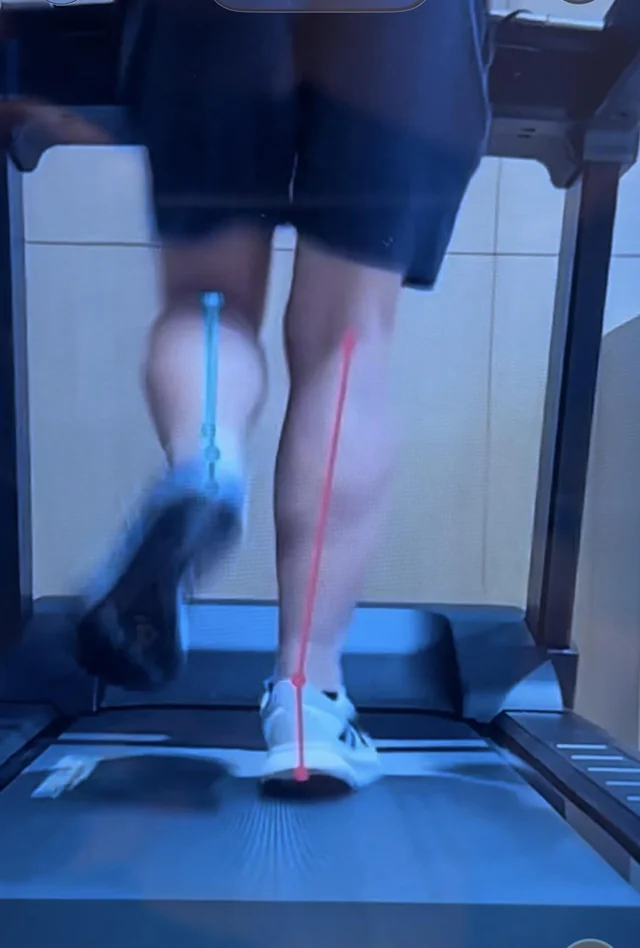
Overpronation: Causes, Symptoms, Home Test and How to Fix It
What Is Overpronation?
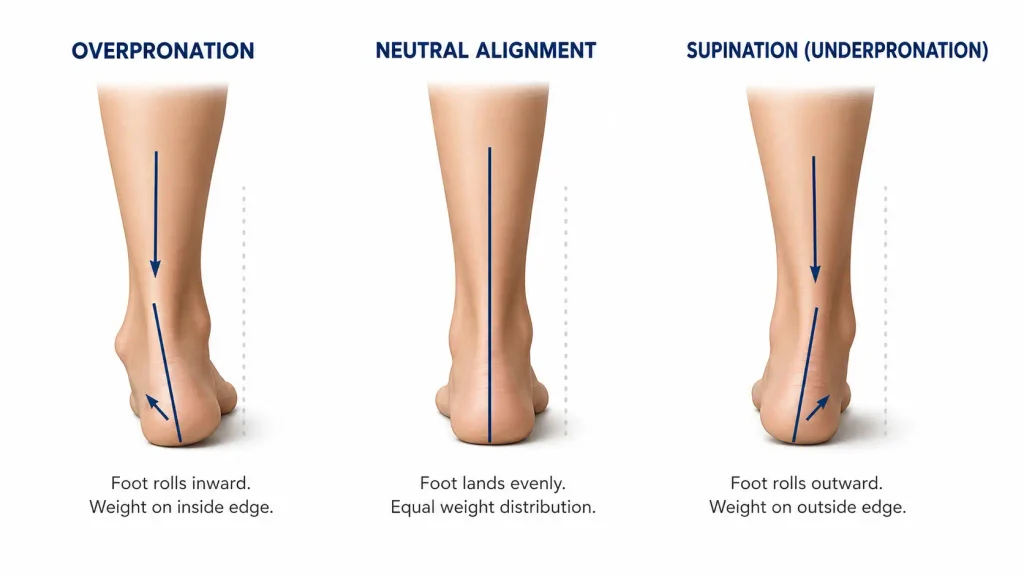
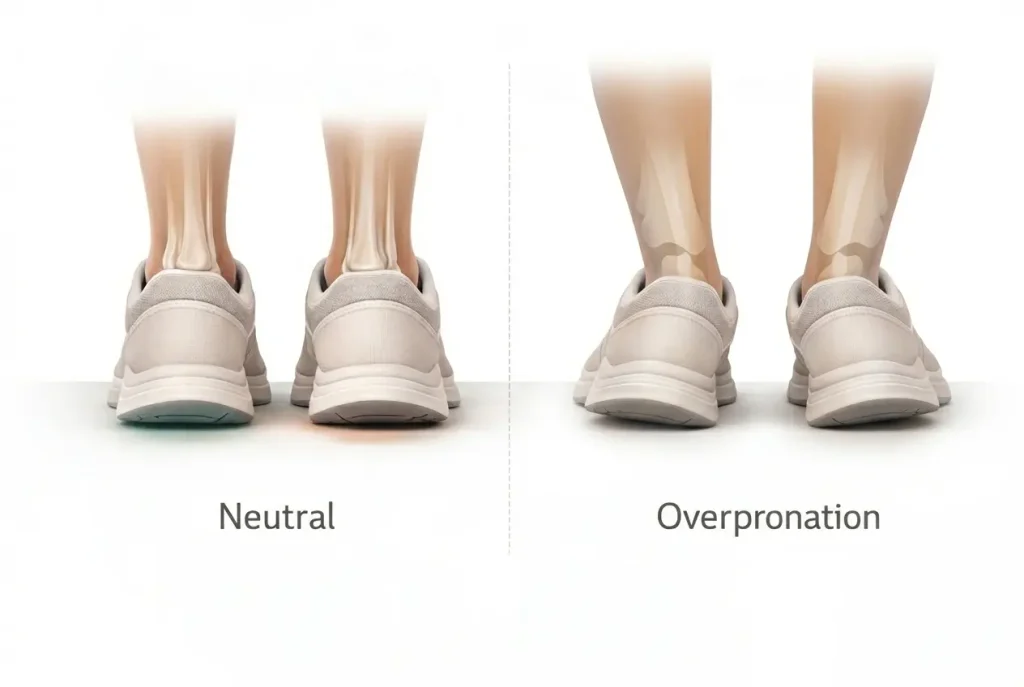
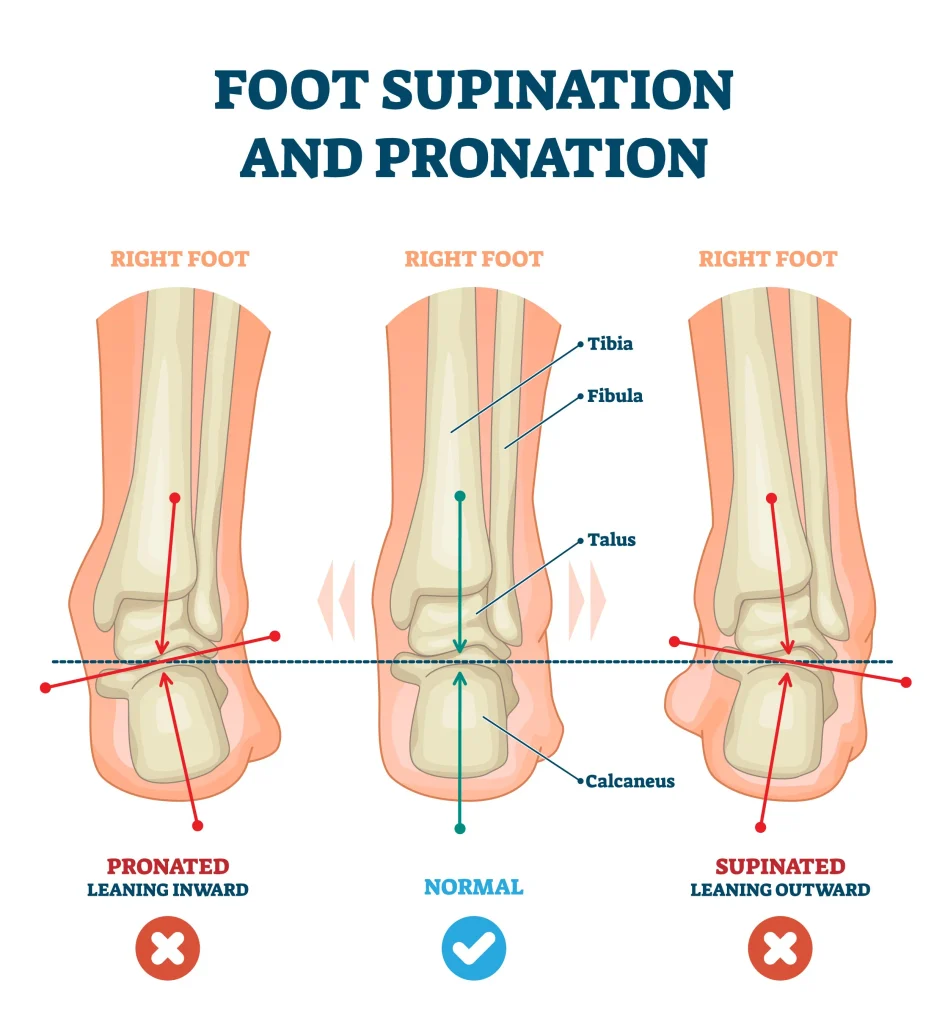
Overpronation is when your foot rolls inward too far, or for too long, after your heel hits the ground. The arch flattens, the ankle tilts inward, and the shin and knee can rotate with it.
Pronation itself is normal. Every healthy foot rolls inward a little to absorb shock and adapt to the surface. The trouble starts when that motion is excessive. You may also see it called excessive pronation or hyperpronation.
Many people with overpronation never notice a thing. Others get aching arches, sore shins, or knee pain that seems to have nothing to do with their feet.
Pronation Types at a Glance
Foot motion sits on a spectrum. Here is how the three patterns compare.
| Pattern | What the foot does | Typical shoe wear | Typical arch |
| Neutral pronation | Rolls in slightly, spreads impact evenly | Even wear, slightly on the outer heel | Medium |
| Overpronation | Rolls in too far | Inner edge of the sole and forefoot | Low or flat |
| Supination (underpronation) | Stays rolled outward, absorbs little shock | Outer edge | High (pes cavus) |
Overpronation vs. Flat Feet vs. PTTD
These three get blurred together online, so it helps to separate them.
- Overpronation is a movement pattern.
- Flat feet (pes planus) are a structural shape. They describe the arch, not how the foot moves, and many flat-footed people have no pain. The two often occur together, but you can have one without the other.
- PTTD (posterior tibial tendon dysfunction) is a tendon problem on the inner ankle, often with progressive arch collapse. It needs a clinician, not a shoe change alone.
What Causes Overpronation?
There is rarely one cause. Most cases come from a mix of structure, strength, and habits.
Flat or low arches. Flexible flat feet are the most common starting point.
Genetics and foot shape. Some people simply inherit more mobile feet.
Weak foot and hip muscles. The tibialis posterior and gluteus medius help control inward collapse.
Tight calves. Limited ankle movement can push the foot to roll in to compensate.
Extra body weight. More load on the arch means more demand on its supporting tissue.
Pregnancy. Weight gain and looser ligaments can temporarily flatten the arch.
Long hours on hard floors. Standing all day tires the muscles that hold the arch up.
Worn or unsupportive shoes. A midsole that has broken down stops guiding the foot.
Past ankle injuries. These can change how the foot loads and rolls.
Sudden jumps in training. Adding mileage too quickly exposes weaknesses.
Symptoms: What Overpronation Can Feel Like
Why It Matters: The Kinetic Chain
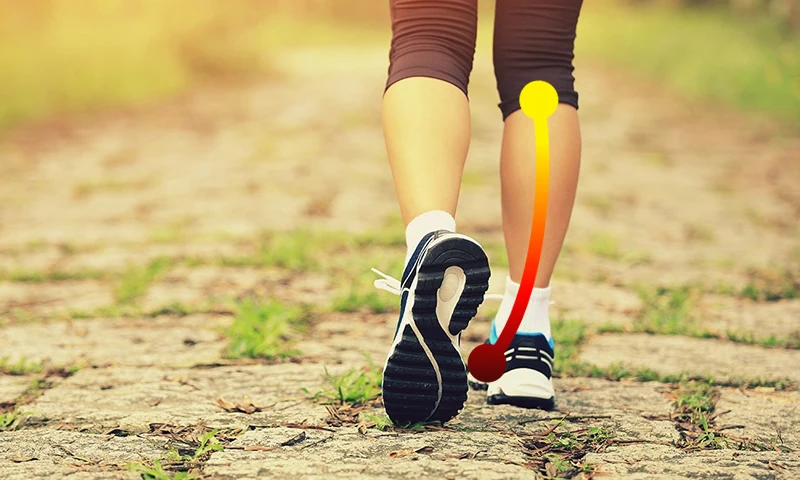
Your foot, ankle, shin, knee, hip, and lower back work as one connected chain. When the foot collapses inward, the load on the structures above it can change.
That is why overpronation is linked to pain in places that seem unrelated. A person may chase knee pain for months before anyone looks at the feet.
Symptoms and Linked Conditions
Some people have no symptoms at all. When symptoms do appear, they tend to show up after walking, running, or standing for long periods.
Common signs include:
- Inner-edge wear on your shoes
- Arches that flatten when you stand
- Heel, arch, or ankle pain
- Feet that ache after short walks
- Knees that drift inward when you squat
- Shin pain, or pain on the outside of the knee or hip
Where Does It Hurt? Linked Conditions
| Condition | Where you feel it |
|---|---|
| Plantar fasciitis | Heel and underside of the foot, worst with the first steps in the morning |
| Shin splints (medial tibial stress syndrome) | Inner shin |
| Runner’s knee (patellofemoral pain) | Around or behind the kneecap |
| Achilles tendinopathy | Back of the heel or lower calf |
| Posterior tibial tendon dysfunction (PTTD) | Inner ankle and arch |
| Bunions (hallux valgus) | Base of the big toe |
| IT band syndrome | Outer knee or hip |
Lower back and hip aches are also reported, though they have many possible causes. Overpronation is one possible contributor, not a guaranteed one.
Red Flags: Do Not Self-Treat
See a medical professional promptly if you have:
- Sudden swelling or severe pain
- Numbness or tingling in the foot
- An arch that is visibly collapsing or changing quickly
- Pain on the inner ankle that keeps worsening
- Difficulty putting weight on the foot
How to Test for Overpronation at Home
No home test replaces a professional assessment, but these checks can point you in the right direction.
The Wet Foot Test
1.Wet the bottom of your foot.
2.Step onto dark paper, a paper bag, or a dry tile.
3.Step off and look at the print.
A wide print with little or no curve along the inner edge suggests a low arch. That raises the odds of overpronation, though it does not prove it.
The Shoe Wear Check
Turn an older pair of shoes over. Heavy wear along the inner edge of the sole, especially under the ball of the foot and the heel, is a classic sign.
The Video Check
Ask someone to film your lower legs from behind while you walk or jog on a treadmill. Watch your ankles. If they bow inward and the heels tilt, that supports the idea of overpronation.
Professional Assessment
A podiatrist or physiotherapist can use clinical tools you cannot replicate at home:
- Foot Posture Index (FPI-6): a scoring system for how the foot sits and moves.
- Navicular drop test: measures how far the arch lowers when you bear weight.
- Gait analysis: video or pressure-plate analysis of how you walk or run.
If you have pain, a professional assessment is more reliable than any checklist.
Does Overpronation Even Matter? The Evidence Debate
This is the part many articles skip. Overpronation is common, and it is not automatically a problem.
Some research on runners has found that how much your foot pronates does not reliably predict who gets injured. A well-known body of work on running shoes also suggests that comfort may be a better guide than foot type when choosing footwear. Evidence in this area is mixed, and experts still disagree.
So what does that mean for you?
- No pain and no history of injury: you probably do not need to “fix” anything.
- Recurring pain: treat the symptoms and the contributing factors, not just the label.
Think of the pronation label as a clue, not a diagnosis.
How to Fix Overpronation: Treatment Options
Treatment Decision Framework: From Symptom to Next Step
Use this table to decide where to start.
| Your situation | Sensible first step |
|---|---|
| No pain, only inner shoe wear | Keep wearing comfortable shoes and add foot and hip strengthening |
| Mild arch or heel ache | Supportive shoes, off-the-shelf arch supports, calf stretching |
| Running with repeated shin or knee pain | Gait analysis, stability shoes if comfortable, controlled mileage |
| Pain lasting more than a few weeks | See a podiatrist or physiotherapist |
| Inner-ankle pain or a changing arch | Orthopedic or podiatry evaluation |
| Painful flat feet in a child | Pediatric podiatry or orthopedic assessment |
| Standing all day for work | Cushioned, supportive work shoes and regular movement breaks |
Shoes for Overpronation
Stability, Motion Control, or Neutral?
- Stability shoes add support on the inner side of the midsole. They are the usual first choice for people with flat arches or inward-rolling feet. Well-known lines include the ASICS Gel-Kayano and GT-2000, Brooks Adrenaline GTS, Saucony Guide, New Balance 860, Mizuno Wave Inspire, and HOKA Arahi.
- Motion control shoes are firmer and more structured, aimed at more severe cases.
- Neutral shoes can still work well for mild overpronators who find them comfortable.
If stability shoes did not help you, you are not alone. Many runners report this on forums, and it fits the research on comfort.
What to Look For
- A firm heel counter that does not collapse when squeezed
- A midsole that resists twisting
- Room for your toes to spread
- A fit that feels good from the first step, not one you have to “break in”
- Trying them on in the afternoon, when feet are slightly larger
How Long Do Shoes Last?
Cushioning and support fade with use. Many runners replace running shoes after a few hundred miles, but the exact number depends on the shoe, your weight, and the surface. Check the manufacturer’s guidance, and replace shoes sooner if the midsole feels flat or the wear is uneven.
Insoles, Arch Supports, and Custom Orthotics
| Option | Best for | Trade-offs |
|---|---|---|
| Off-the-shelf arch supports (Superfeet, Dr. Scholl’s and similar) | Mild to moderate symptoms | Affordable and easy to find, but generic |
| Semi-custom insoles | Moderate symptoms | Better fit, mid-range cost |
| Custom orthoses | Persistent or complex cases | Prescribed by a clinician, highest cost |
Insoles can reduce symptoms for many people, particularly heel and arch pain. They do not strengthen the foot, so they work best alongside exercises. Give them a few weeks to adjust, and wear them gradually at first. Makers and clinicians should not promise a cure.
What Does It Cost?
Prices depend heavily on country, brand, and clinic. As a rough guide, off-the-shelf insoles cost the least, branded stability shoes sit in the mid to premium range, and custom orthotics and clinic gait analysis vary the most. Check current prices where you live before you buy.
Exercises and Stretches
Build these in gradually, three to four times a week.
- Short foot exercise. Pull the ball of the foot toward the heel without curling your toes. Hold five seconds, repeat ten times.
- Calf raises. Slow and controlled, three sets of ten to fifteen.
- Towel scrunches. Use your toes to drag a towel toward you.
- Single-leg balance. Thirty to sixty seconds on each side.
- Clamshells and side-lying leg raises. These strengthen the hips.
- Calf and plantar fascia stretches. Hold thirty seconds, two to three times.
- Resistance-band inversion. Targets the tibialis posterior.
Stop any exercise that causes sharp pain, and ask a physiotherapist to tailor the routine if you are unsure.
Gait Retraining
Some physiotherapists use gait retraining, such as adjusting cadence or foot strike, to reduce load on painful areas. It works best with expert guidance rather than from videos alone.
Alternatives If Stability Shoes Are Not Helping
Other options include neutral cushioned shoes you find comfortable, gradual minimalist-style training under guidance, taping or bracing for short-term relief, weight management where load is a factor, and physiotherapy-led gait retraining.
Pros and Cons of Each Option
| Approach | Pros | Cons |
|---|---|---|
| Stability shoes | Immediate support, easy to start | Cost, and not a cure |
| Insoles | Affordable and portable | Need adjusting, wear out over time |
| Custom orthotics | Fitted to your foot | Expensive, need a clinician |
| Exercises | Address weakness, low cost | Need consistency |
| Gait retraining | Can change loading patterns | Needs expert input |
| Surgery | Option for structural problems | Rare, long recovery |
When Surgery Is Considered
Surgery is a last resort, considered only for significant structural problems or conditions such as advanced PTTD after conservative care has failed.
Special Situations
Children
Many young children have flat-looking, flexible feet that develop an arch over time. Do not self-diagnose. Painful or stiff flat feet in a child deserve assessment by a pediatric podiatrist or orthopedic specialist.
Pregnancy
Hormonal changes and weight gain can flatten the arch and make feet ache. Supportive footwear and gentle strengthening can help, and some people find the change partly reverses after birth. Check with your maternity or physiotherapy team.
People Who Stand All Day
Teachers, shopkeepers, salon workers, nurses, and factory staff face long hours on hard floors. Cushioned, supportive work shoes, anti-fatigue mats where possible, and short movement breaks reduce strain.
Older Adults
Arch changes and tendon problems become more common with age. New inner-ankle pain or a visibly collapsing arch should be looked at promptly.
Quick Checklist
- Do the wet foot test and shoe wear check
- Note where and when the pain appears
- Get fitted for shoes in the afternoon
- Try supportive shoes or arch supports
- Start the core exercises
- Track your symptoms for four to six weeks
- See a professional if there is no improvement
Common Mistakes to Avoid
- Choosing shoes by brand hype instead of fit and comfort
- Wearing shoes long past their useful life
- Over-correcting with very rigid support you do not need
- Running through pain
- Relying only on insoles and skipping strength work
- Making too many changes at once
- Guessing about a child’s flat feet
Where to Get Help (Regional Notes)
Terminology and access differ by country.
- United States: podiatrists (DPM), physical therapists, and sports medicine physicians. Many running stores offer free basic gait analysis.
- United Kingdom: podiatrists and chartered physiotherapists, through the NHS or privately.
- India and Pakistan: orthopedic doctors and physiotherapists in major cities. Specialist podiatry services are less common, so ask clinics whether they offer gait analysis or custom insoles before booking.
- UAE, Australia, Canada: podiatrists and physiotherapists are widely available in private practice.
In hot, humid climates, choose breathable uppers and moisture-wicking socks. In markets where counterfeit sports shoes circulate, a fake “stability” shoe may offer no real support, so buy from authorized sellers when you can.
Searching for “podiatrist near me” or “gait analysis [your city]” is a good place to start.
Frequently Asked Questions
1.What causes overpronation?
Flat or low arches, weak foot and hip muscles, tight calves, extra weight, pregnancy, long hours on hard floors, and worn shoes are common causes. Genetics also play a role.
2.How do I know if I overpronate?
Look for inner-edge wear on your shoes, a flat wet footprint, and ankles that tilt inward on video. A gait analysis from a professional gives the most reliable answer.
3.Is overpronation bad?
Not necessarily. Many people overpronate without any problems. It matters when it is linked to pain or repeated injuries.
4.Can overpronation be corrected?
Symptoms can often be managed well with supportive footwear, insoles, strengthening, and stretching. Your underlying foot structure may not change, but your comfort usually can.
5.Do I need orthotics?
Not always. Many people do well with good shoes and exercises. Custom orthotics make most sense for persistent or complex problems, ideally after a professional assessment.
6.Can I run with overpronation?
Yes, many runners do. Choose comfortable shoes, build mileage gradually, strengthen your feet and hips, and get help if pain keeps returning.
7.Does overpronation cause knee pain?
It can contribute, because inward foot roll may change how the shin and knee are loaded. Knee pain has many causes, so persistent pain deserves proper assessment.
8.Can it cause lower back pain?
It may be one contributing factor in some people, but back pain has many other common causes. A clinician can sort out what is driving yours.
9.Is overpronation the same as flat feet?
No. Flat feet describe arch shape, while overpronation describes movement. They often occur together, but you can have one without the other.
10.How long do insoles take to work?
Many people need a few weeks to adjust and judge the benefit. Build up wearing time gradually, and see a professional if symptoms get worse.
Conclusion
Overpronation is common, manageable, and not always a problem. What matters most is whether your feet are causing pain, not which label they carry.
Start simple. Test your feet at home, choose comfortable and supportive shoes, add strength and calf work, and give any insoles a fair few weeks. If pain lingers, worsens, or comes with red-flag signs, book a podiatrist or physiotherapist rather than guessing.
This article is for general education and is not a substitute for professional medical advice.
These information are gathered from different surveys, medical tests and tech giants like google, Techradar, nymag and more. Our top priority is to provide you valuable information.
For More Details About Different Projectors Click Here