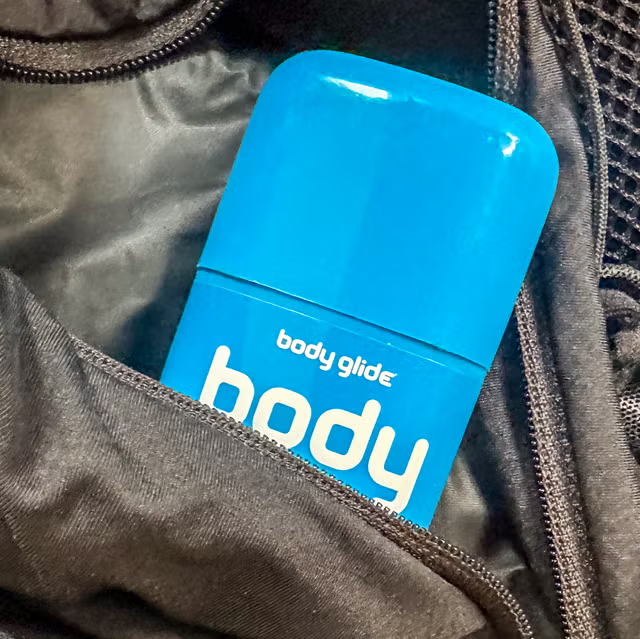
What Is an Anti Chafing Stick?
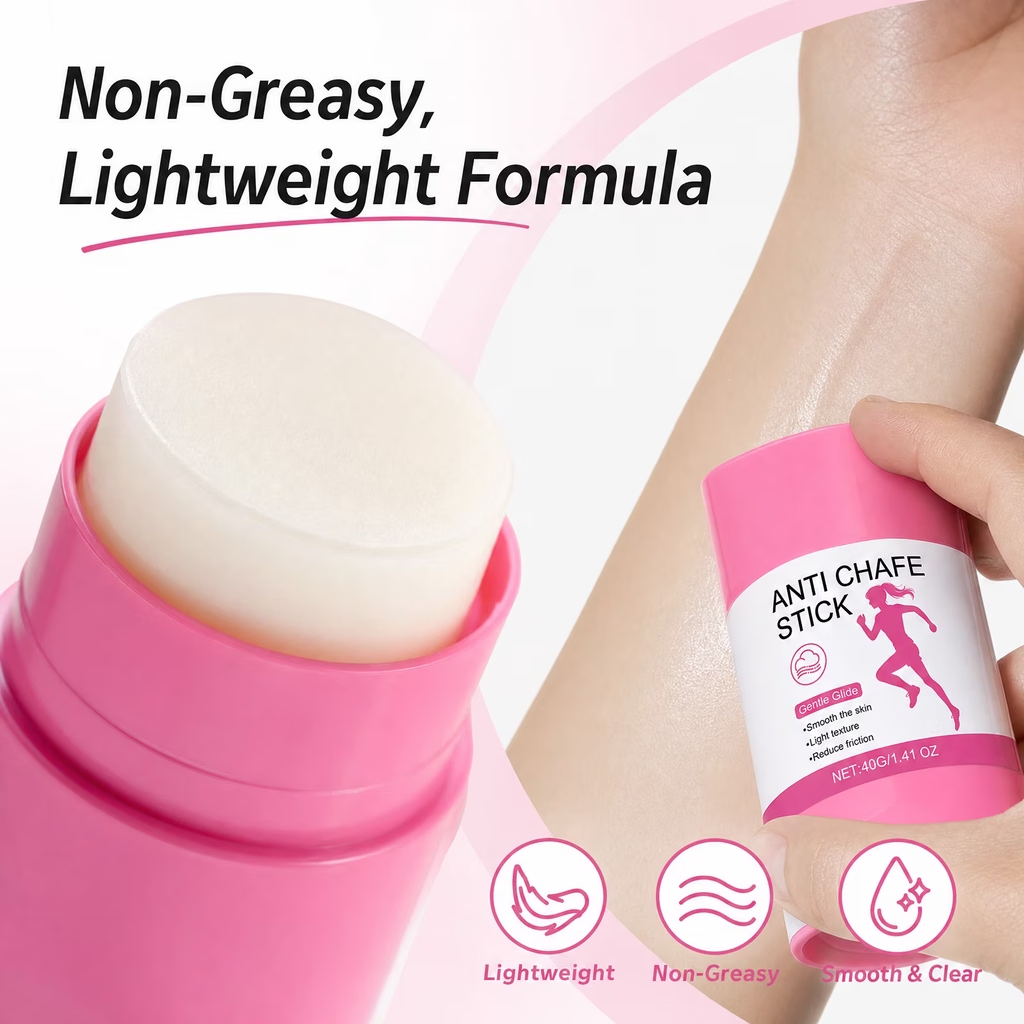
An anti chafing stick is a solid balm in a twist-up tube that you swipe over skin before it starts to rub. It leaves a thin, slippery barrier that lowers friction, so skin glides against skin or fabric instead of grinding.
Think of it as deodorant for friction. You apply it to clean, dry skin, and it keeps working through a long walk, a run, a humid commute or a day in a dress.
You will also see it sold as an anti chafe balm stick, anti friction stick, chub rub stick, glide stick or skin protectant stick. They are the same idea with different formulas.
Why Chafing Happens (and Why It Hurts So Much)
Chafing is skin irritation caused by repeated rubbing. Clinically it is a form of friction dermatitis. Sweat, humidity and salt make it worse because wet skin tears and irritates far more easily than dry skin.
The usual early signs are warmth, redness and a stinging feeling. Left alone, it can become raw, swollen or even bleeding skin, which is why prevention beats repair.
Chafing is not just a thigh issue, and it is not limited to athletes. It shows up in these places:
- Inner thighs (often called chub rub or runner’s rash)
- Underarms
- Nipples, especially on long runs
- Bra line and under the bust
- Groin crease and skin folds
- Feet, toes and heels, where shoes rub
- Waistband lines and pack-strap contact points
How an Anti Chafing Stick Works
A stick works in three simple ways.
- It lubricates. Waxes and oils create a smooth film, which lowers the friction between surfaces.
- It forms a barrier. The film keeps skin from rubbing directly against skin or seams.
- It resists moisture. Many formulas shed sweat for a while, so the barrier lasts longer than a plain lotion.
Many sticks also include skin-soothing ingredients such as vitamin E, aloe or allantoin. These do not change the friction physics, but they make skin feel calmer after rubbing.
Expert note: a stick works best when it goes on before friction starts. It can calm mild irritation, but it is not a treatment for raw or broken skin.
Who Needs One?
Almost anyone whose skin rubs, but a few groups benefit most:
- Runners and marathoners: thighs, underarms and nipples over long distances
- Cyclists: saddle contact zones and inner thighs
- Hikers and trekkers: feet, thighs and pack-strap areas
- Plus-size and curvy wearers: thighs, under-bust and skin folds during daily wear
- Travellers in hot climates: thighs and groin creases while walking and sightseeing
- Swimmers and triathletes: wetsuit contact points and underarms
- Everyday dress and skirt wearers: thigh rub with no sport involved
It is also useful for new parents and anyone dealing with a long day on their feet.
When You Should Use One
Use a stick whenever friction and moisture are likely to meet:
- Hot or humid weather, even without exercise
- Workouts or walks lasting more than about half an hour
- New shoes, rough seams, bra straps or backpack straps
- Skirts, dresses and shorts without thigh coverage
- Long flights, festivals, weddings or events where you will walk and sweat
Put it on before you leave the house, not after the burning starts.
Types of Anti Chafing Sticks
Not every stick feels or performs the same. Here is how the main types compare.
| Type | How it feels | Best for | Watch out for |
|---|---|---|---|
| Classic wax and oil stick | Smooth, slightly waxy | Daily use, general sport | Can feel greasy in extreme heat |
| Silicone-based glide stick | Dry, silky | Long events, heavy sweat | Some people prefer silicone-free |
| Plant-based or natural stick | Soft, nourishing | Sensitive or eco-minded users | May soften faster in hot weather |
| Petroleum-free stick | Light, clean | Users avoiding petrolatum | Ingredients vary by brand |
| Fragrance-free stick | Neutral | Reactive or eczema-prone skin | Fewer scent options |
| Powder-feel hybrid | Dry-touch | Humid, sweaty conditions | Often less slippery |
| Mini or travel stick | Compact | Gym bags, flights, hikes | Less product per tube |
| Foot-focused stick | Targeted glide | Blister-prone feet | May not suit all body zones |
What Is Inside: Common Ingredients Explained
A short ingredient list is usually a good sign. Here is what you are likely to see and what it does.
| Ingredient | Role | Good to know |
|---|---|---|
| Beeswax, candelilla wax, carnauba wax | Gives the stick its shape and hold | Beeswax is not vegan; candelilla and carnauba are plant waxes |
| Ozokerite | Mineral wax for structure | Found in some vegan sticks |
| Shea butter, cocoa butter | Soften and condition | Rich feel; may soften in heat |
| Coconut oil and other plant oils | Glide and moisture | Can feel oily on some skin |
| Dimethicone | Silicone for dry, silky glide | Popular for endurance sport |
| Petrolatum | Occlusive barrier | Effective but heavier; some avoid it |
| Vitamin E (tocopherol) | Skin conditioning | Common supporting ingredient |
| Allantoin, aloe | Soothing | Helpful for already irritated skin |
| Fragrance | Scent | The most common trigger for reactions |
If you have allergies or very reactive skin, scan the label for fragrance and anything you already know bothers you. A quick patch test on the inner forearm is a sensible first step.
Anti Chafing Stick vs Powder, Cream, Jelly and Other Options
A stick is not the only fix, and it is not always the best one. Here is how the options compare.
| Option | Strength | Weakness | Best when |
|---|---|---|---|
| Anti chafing stick | Targeted, portable, mess-free | Needs reapplying on long days | You want convenience and glide |
| Balm tin or tub | Rich, soothing | Greasy fingers | You prefer a thicker barrier |
| Anti-chafe powder | Absorbs sweat | Can clump when wet | Dry skin folds, mild rubbing |
| Cream or lotion | Moisturising | Absorbs quickly, short barrier | After activity, not during |
| Petroleum jelly (such as Vaseline) | Cheap and widely sold | Can stain fabric and feels heavy | Occasional or budget use |
| Spray | Easy on hard-to-reach spots | Less precise | Backs, shoulders, feet |
| Thigh bands | No product on skin | Can slip or roll | Daily skirt or dress wear |
| Compression shorts | Remove skin-on-skin contact | Warm in heat | Sport and long events |
The strongest approach is layered. Moisture-wicking clothing plus a stick on your main friction zones usually beats either one alone.
How to Use an Anti Chafing Stick, Step by Step
- Start with clean, dry skin. Sweat, lotion or sunscreen residue stops the film from sticking.
- Warm the tip. If the stick feels hard, hold it against your hand for a few seconds.
- Swipe two to four passes. Cover the whole area that rubs and extend slightly past its edges.
- Smooth it out. Use clean fingers or the stick itself to spread a thin, even layer.
- Let it settle. Wait about 30 to 60 seconds before dressing.
- Reapply when needed. Top up after swimming, heavy sweating, or when you feel the first warm rub.
- Wash it off afterwards. Use mild soap and water, then moisturise if skin feels tight.
How often should you reapply? There is no single number. As a rule, reapply every few hours during long, sweaty activity, and sooner after swimming or toweling off.
Application tips by body zone
- Inner thighs: apply a band, not a single line, from the upper thigh down to where skin stops touching.
- Underarms: use a fragrance-free stick if you also wear deodorant, and avoid layering several heavy products.
- Nipples: a thin layer is enough; pair it with a moisture-wicking top.
- Feet: apply to heels and toe contact points before putting on socks.
- Groin crease and folds: use external skin only, never inside the body, and choose a gentle fragrance-free formula.
Does Climate Matter? Heat, Humidity and Melt Points
It matters more than most buyers expect. A stick that feels perfect in a cool climate can turn soft or greasy in a hot bag.
In hot, humid regions, look for silicone-based or higher-melt formulas, keep the stick out of direct sun, and avoid leaving it in a parked car. In cooler, damp places such as the UK or Canada, a standard wax and oil stick usually does the job, but winter layering can still cause rubbing at the waist and thighs.
Carrying a mini stick in a small pouch is a simple way to avoid melted tubes and mid-day reapplication problems.
Which Anti Chafing Stick Should You Choose? A Decision Guide
Use these questions to narrow your choice.
- What will you use it for? Daily wear, sport, travel or feet?
- What is your climate? Hot and humid regions favour heat-stable or silicone-based glides.
- How sensitive is your skin? Pick fragrance-free and a short ingredient list if you react easily.
- What feel do you prefer? Dry and silky, or rich and moisturising?
- Do you avoid certain ingredients? Check for petrolatum, silicone, beeswax or fragrance.
- What size do you need? Full size for home, mini for bags and travel.
- What does it cost per gram? A cheap small stick can cost more per use than a mid-size one.
| If you are… | Look for |
|---|---|
| A distance runner in heat | Sweat-resistant, dry-touch or silicone-based stick |
| A dress or skirt wearer | Light, low-residue, fragrance-free stick |
| Sensitive-skinned | Fragrance-free, short ingredient list, patch test first |
| A hiker | Foot-friendly stick plus a body stick |
| A frequent traveller | Mini, leak-proof twist tube |
| Budget-focused | Basic wax-and-oil stick with good price per gram |
| Eco-minded | Plant-based, vegan or petroleum-free options |
Popular Brands to Know
You will see the same names across pharmacies, running stores and online marketplaces. These are commonly mentioned brands, not an endorsement of any single one:
- Body Glide (Original and For Her), a long-standing sport brand
- Megababe Thigh Rescue, popular for thigh and everyday wear
- Gold Bond Friction Defense, a widely available budget pick
- RunGuard, a runner-focused natural stick
- Squirrel’s Nut Butter, a natural salve-style option
- Zone Naturals Chub Rub, an all-natural stick
- Vaseline body balm stick, an easy pharmacy pick
- Hard Candy Sheer Envy, KT Performance+ and Pee Safe, additional options in the category
Always read the current label. Formulas, scents and sizes change over time.
How Much Does an Anti Chafing Stick Cost?
Prices vary by country, size and brand, so treat these as rough guides based on recent retail listings in the US market:
| Tier | Typical price | What you usually get |
|---|---|---|
| Budget | Roughly $5 to $7 | Basic glide, larger sizes, pharmacy availability |
| Mid-range | Roughly $8 to $12 | Better glide, nicer ingredients, sport or sensitive-skin options |
| Premium or specialty | Higher | Specialised formulas, small-batch or niche brands |
To compare fairly, divide price by weight. A $10 stick with twice the product can be cheaper per use than a $6 mini.
Where to Buy Anti Chafing Sticks Around the World
You can find sticks in most regions, but where you look changes by country. If you search for an anti chafing stick near me or in your city, start with these channels.
| Region | Climate note | Where to look | Buying tip |
|---|---|---|---|
| United States | Humid south, hot summers | Pharmacies (Walgreens, CVS), running stores, Amazon | Compare price per ounce across brands |
| United Kingdom | Cool and damp | Boots, running specialists, outdoor shops | Look for sport-specific sticks for marathon season |
| Canada | Cold winters, humid summers | Pharmacies, running stores, online | Seasonal use; winter layers can still rub |
| Australia | Warm and humid in many areas | Pharmacies, sports retailers, online | Water-resistant options help for beach and triathlon |
| India | Hot and monsoon humidity | Pharmacies, sports stores, online marketplaces | Choose heat-stable formulas and check manufacturing dates |
| Pakistan | Very hot summers | Pharmacies, cosmetics and sports shops, online marketplaces | Check stock by city and verify the seller’s authenticity |
| UAE and Gulf | Extreme heat | Pharmacies, sports chains, online retailers | Store in a cool bag and avoid parked cars |
| Singapore and Malaysia | Hot and humid year-round | Pharmacies, sports stores, online | Dry-touch or silicone-based sticks suit constant sweat |
How to check you are buying the real thing
- Buy from an authorised retailer or the brand’s official store
- Check the batch number and expiry or manufacturing date
- Look for a full ingredient list, ideally in your local language
- Be cautious of prices far below the usual range
- Make sure the packaging seal and print quality look consistent
Pros and Cons of Anti Chafing Sticks
Pros
- Quick, portable and easy to apply
- Targets small or awkward zones
- Little mess compared with powders and tubs
- Works under most clothing
- Many formulas are gentle and moisturising
Cons
- Needs reapplying on long or very sweaty days
- Can soften or melt in extreme heat
- May leave a faint mark on light fabric if over-applied
- Not a treatment for raw or broken skin
- Some formulas contain fragrance or ingredients that bother sensitive skin
Common Mistakes and When Not to Use One
Most failures come down to technique, not the product.
- Applying to wet or sweaty skin. The film will not hold.
- Using too little. One quick pass rarely covers the whole rub zone.
- Using too much. A thick layer feels greasy and can shift under clothing.
- Waiting until it hurts. Prevention works far better than repair.
- Ignoring fabric. Wet cotton and rough seams can defeat any stick.
- Leaving it in the heat. A melted stick loses shape and performs unevenly.
Do not use a stick on open wounds, broken skin or suspected infection. Stop using any product that causes itching, swelling or worsening redness. See a doctor or pharmacist if you notice fever, pus, spreading redness, severe pain or a rash that does not improve.
Storage, Shelf Life and Travelling With a Stick
Keep the cap on and store the stick in a cool, dry place. Heat and sunlight shorten its life and change its texture.
Most sticks have a printed period-after-opening symbol or an expiry date, so check the packaging. Throw away any stick that smells off, looks discoloured or feels unusually grainy.
Because a stick is solid, it usually does not fall under liquid limits in carry-on bags, but airline and airport rules differ, so check before you fly.
For Businesses: Private Label and Wholesale Anti Chafing Sticks
If you are a retailer, gym, brand owner or distributor, the category is accessible but not trivial. Typical considerations include:
- Formulation choices: wax, butter and oil balance, silicone or silicone-free, fragrance-free options
- Packaging: twist-up tubes, sizes, leak-proof seals, branding and labelling
- Minimum order quantities (MOQ): vary widely by manufacturer, so ask early
- Compliance: cosmetics rules differ by market. The EU follows Regulation (EC) No 1223/2009, the UK has its own cosmetics regulation, and the US regulates cosmetics under FDA rules including the Modernization of Cosmetics Regulation Act (MoCRA). Some products making skin-protectant claims may fall under different OTC rules
- Quality systems: look for manufacturers working to cosmetic GMP such as ISO 22716
- Claims: keep wording factual, and be careful with medical or healing claims
A reliable contract manufacturer will explain testing, labelling and stability checks before you commit.
Quick Checklists
Before activity
- Skin clean and dry
- Stick applied to every friction zone
- Moisture-wicking clothing and flat seams chosen
- Mini stick packed for reapplication
After activity
- Rinse the area gently with mild soap and water
- Pat dry instead of rubbing
- Moisturise if skin feels tight
- Cap the stick and store it somewhere cool
Frequently Asked Questions
1.What is an anti chafing stick used for?
It is used to reduce rubbing on skin, most often on inner thighs, underarms, nipples, feet and under the bust. It helps prevent redness, rawness and rashes during exercise, travel or hot weather.
2.Does an anti chafing stick really work?
For most people, yes, particularly for prevention. Results depend on the formula, how well you apply it, and how long and sweaty the activity is. It helps less once skin is already broken.
3.Where do you put an anti chafing stick?
Apply it to any area where skin rubs skin or fabric. Common spots are inner thighs, underarms, nipples, bra line, groin creases, heels and toes, and under straps.
4.How long does an anti chafing stick last?
A single application often lasts a few hours, but that varies with sweat, heat and movement. Reapply after swimming, heavy sweating or during long events.
5.Is an anti chafing stick better than powder?
Not always. A stick reduces friction, while powder soaks up moisture. Many people use a stick on rubbing zones and powder in damp skin folds.
6.Can you use an anti chafing stick every day?
Usually yes, on intact skin, as long as the formula suits you. Wash it off at the end of the day and stop if irritation appears.
7.Can I use an anti chafing stick on my private area?
Only on the external skin around the groin crease and inner thighs, never on mucous membranes or inside the body. Choose a gentle fragrance-free formula and stop if you feel irritation.
8.Is Body Glide the same as Vaseline?
No. Both reduce friction, but they are different products. Vaseline is mainly petrolatum, while Body Glide-style sticks are balm formulas designed to glide on cleanly, with a less greasy feel for many users.
9.Does an anti chafing stick stain clothes?
It can leave a faint mark on light fabrics if you apply too much. Use a thin layer, let it settle for a minute, and wash garments as normal.
10.Can I use an anti chafing stick on my feet?
Yes, many people apply it to heels and toes to reduce rubbing and blisters. Put it on before socks and shoes, and choose a formula you are comfortable using on your feet.
11.Is an anti chafing stick safe on broken skin?
No. Avoid open, weeping or infected skin. Let it heal, keep it clean, and speak to a doctor or pharmacist if it is painful or not improving.
12.Can I use one while pregnant or breastfeeding?
Many people do, but ingredient lists vary. If you are unsure about a specific ingredient, check with your doctor, midwife or pharmacist first.
Conclusion
An anti chafing stick is a simple, low-cost way to protect skin from friction, and it works best when it matches your climate, your skin and your activity. The basics are easy: pick a formula you tolerate, apply a thin layer to clean, dry skin before friction starts, and reapply when the day gets long or sweaty.
Pair the stick with moisture-wicking clothing, wash it off afterwards, and store it somewhere cool. If your skin breaks, becomes infected or the rash will not settle, stop and get advice from a doctor or pharmacist rather than adding more product.
Unfulfilled Points: A medical review note, application diagram, how-to video and structured data markup cannot be produced in plain article text and need to be added at publishing. Search volumes and live related-question lists were not available, so FAQs follow the supplied dataset.
These information are gathered from different surveys, medical tests and tech giants like google, Techradar, nymag and more. Our top priority is to provide you valuable information.
For More Details About Different Projectors Click Here