What Are Pronated Feet?
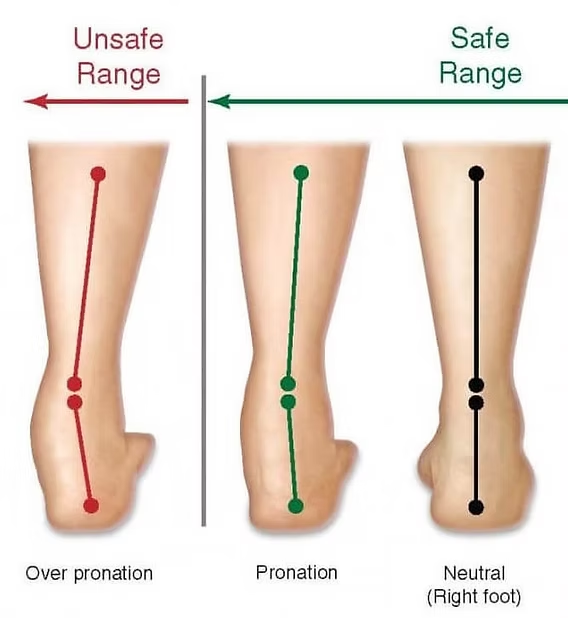
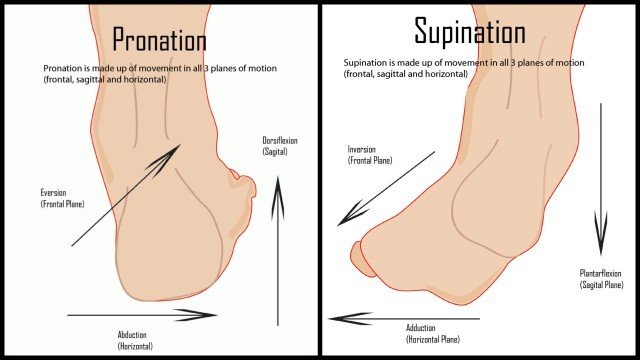
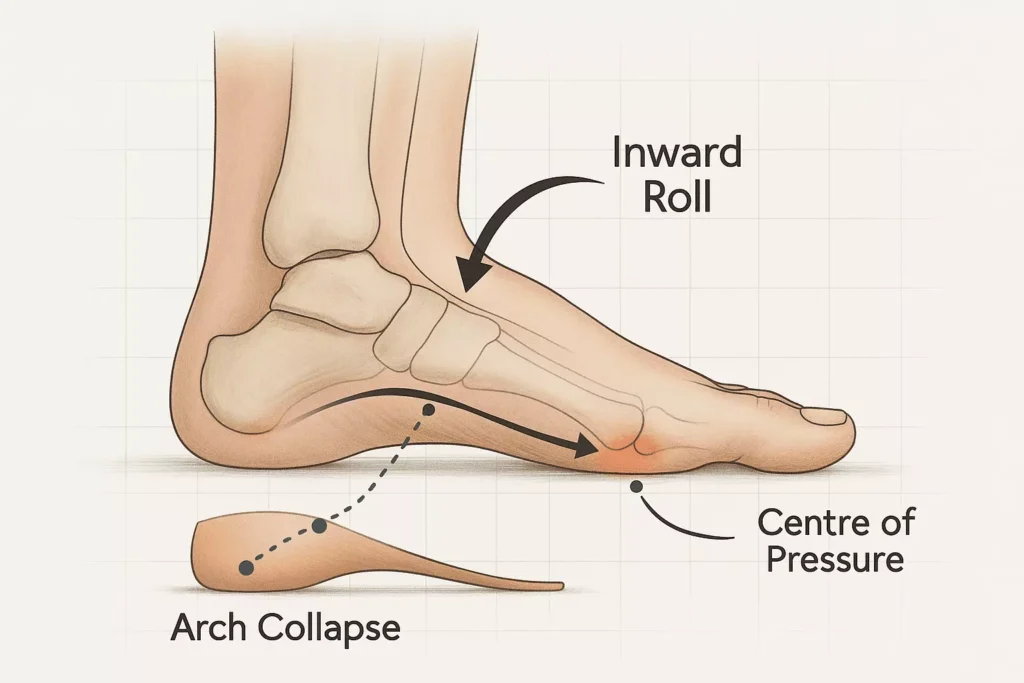
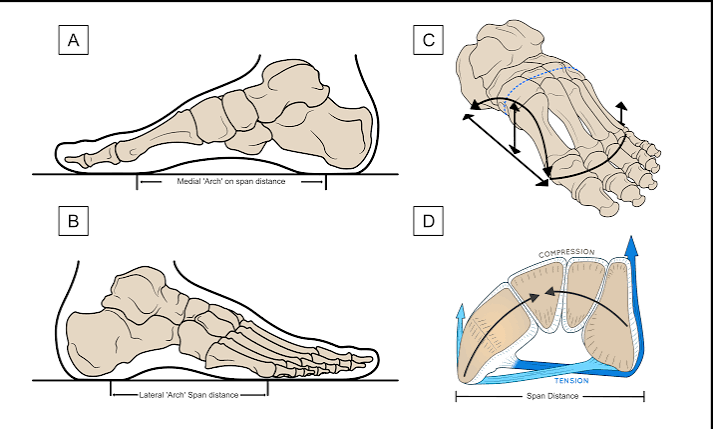
Pronated feet roll inward when you stand, walk or run. The ankle tilts toward the midline, the heel leans in, and the inner arch lowers. A little of this is normal and healthy. Excessive pronation, called overpronation, can cause pain in the foot, shin or knee.
Most people searching this term want one answer first: is this a problem for me? Often it isn’t. This guide helps you decide, test it yourself, and choose a sensible next step.
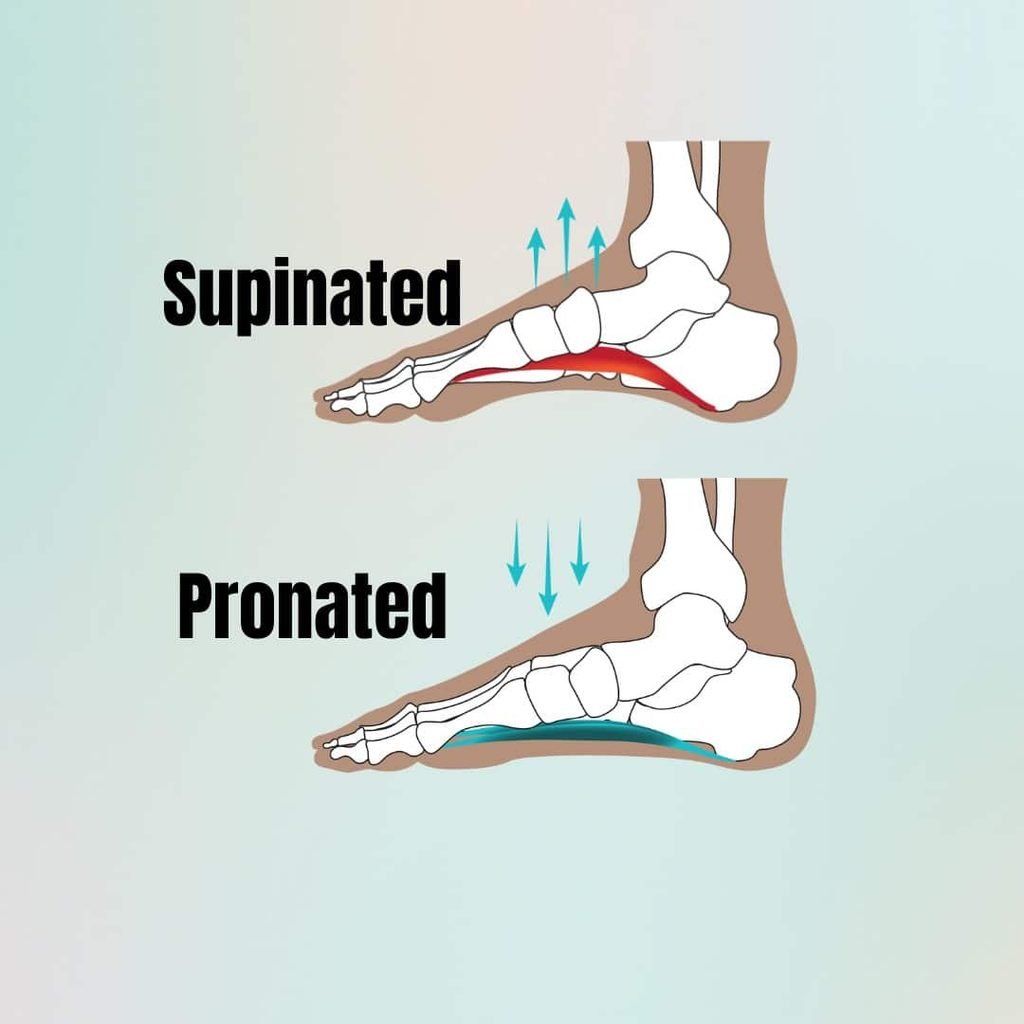
Pronation, Overpronation and Flat Feet: Clearing Up the Confusion
These three terms get mixed up constantly, which is why advice online often feels contradictory. They describe different things.
| Term | What it describes | Plain meaning |
|---|---|---|
| Pronation | Motion | The natural inward roll that absorbs shock |
| Overpronation | Excess motion | The foot rolls in too far or too long |
| Flat feet (pes planus) | Structure | A low or absent medial longitudinal arch |
| Supination (underpronation) | Opposite motion | Weight stays on the outer edge; the foot is stiff |
You can have flat feet without overpronating, and you can overpronate with a visible arch. Many people with flat feet do overpronate, which is why the two overlap so often.
Think of pronation as a suspension system. Too little and the ride is harsh. Too much and the whole system wobbles.
Are Pronated Feet Actually a Problem?
Not necessarily. Plenty of people with pronated feet walk, run and stand all day without pain.
Overpronation tends to matter when it comes with symptoms, a sudden change, or heavy repeated load. The research on how strongly pronation predicts injury is mixed, especially in runners. Training volume, strength, footwear fit and past injuries often matter as much as foot shape.
That’s why treatment should follow symptoms, not appearance. A flat-looking arch with no pain rarely needs a fix. Persistent pain, swelling, or an arch that is changing deserves a proper look.
What Causes Pronated Feet?
Pronated feet usually have more than one cause. Most fall into three groups.
Structural and inherited causes
- Naturally flexible or low arches, which often run in families
- Generalised ligament laxity (hypermobility)
- Tight calf muscles that limit ankle movement
- Differences in leg length or hip rotation
- Rarely, a tarsal coalition, where foot bones are fused or joined abnormally
Acquired causes
- Weakness or overload of the tibialis posterior tendon, the main support for the arch
- Weak intrinsic foot muscles and weak hip abductors
- Weight gain, which increases load on the arch
- Pregnancy, from hormonal ligament softening plus extra weight
- Previous ankle sprains or foot injuries
- Inflammatory arthritis or age-related tendon wear
Lifestyle contributors
- Long hours on hard floors
- Worn-out or unsupportive shoes
- Sudden jumps in walking or running volume
Shoes are rarely the original cause, but the wrong pair can make symptoms worse.
Symptoms: Where Pronated Feet Show Up
Because the foot sits at the base of a chain, overload can appear above it.
| Area | What you may feel | Linked conditions |
|---|---|---|
| Arch | Aching, fatigue after standing | Strain of the arch ligaments |
| Heel | Sharp pain with first steps in the morning | Plantar fasciitis |
| Inner ankle | Soreness, swelling | Posterior tibial tendon dysfunction (PTTD) |
| Shin | Ache along the inner edge during exercise | Medial tibial stress syndrome (shin splints) |
| Back of heel | Stiffness, tenderness | Achilles tendinopathy |
| Knee | Pain around or behind the kneecap | Patellofemoral pain |
| Big toe and ball | Drifting toe, pressure pain | Bunions, metatarsalgia |
| Hip and lower back | Dull ache after long days | Compensation patterns |
A useful rule: location tells you which tissue is complaining. It doesn’t prove pronation is the cause, so a clinician’s assessment helps when pain keeps returning.
How to Tell If You Have Pronated Feet
Home checks are screening tools, not diagnoses. Use two or three together.
The wet footprint test
- Wet the sole of one foot.
- Step onto dark paper or dry concrete.
- Compare the print.
A wide print with little or no inner curve suggests a low arch. A moderate curve suggests a neutral arch. A narrow band suggests a high arch.
The shoe-wear check
Look at an old pair. Heavy wear on the inner heel and inner forefoot points toward overpronation. Wear on the outer edge points the other way.
The view from behind
Have someone photograph your heels from behind while you stand relaxed. If the heels lean in and the Achilles tendon curves inward, pronation may be marked. Seeing more toes on the outer side than usual is another clue.
The single-leg heel raise
Stand on one leg and rise onto your toes. A healthy arch lifts and the heel turns slightly inward as you rise. If you can’t rise, or the arch stays collapsed, ask a clinician to check tibialis posterior function.
Tests a professional may use
- Foot Posture Index (FPI-6): a scored visual assessment of foot alignment
- Navicular drop: measures how far the navicular bone lowers from sitting to standing
- Gait analysis: video or pressure-plate review of how you walk or run
- Imaging: weight-bearing X-ray, ultrasound or MRI, mainly for rigid feet, tendon problems or persistent swelling
A Practical Treatment Ladder
Start simple and move up only if you need to. Many clinicians reassess after about six to eight weeks.
| Step | What to do | Typical timeframe |
|---|---|---|
| 1. Load management | Reduce sudden increases in walking, running or standing | Immediately |
| 2. Strength and mobility | Foot, calf and hip exercises (below) | Daily, reassess at 6-8 weeks |
| 3. Better footwear | Supportive shoes with a firm heel and stable midsole | Immediately |
| 4. Off-the-shelf insoles | Add a firm contoured insole if symptoms persist | Trial for a few weeks |
| 5. Professional review | Podiatrist or physiotherapist, gait analysis | If no progress by 6-8 weeks |
| 6. Custom orthotics, bracing or taping | For persistent, complex or structural cases | After assessment |
| 7. Specialist opinion | For PTTD, rigid flat foot or failed conservative care | When recommended |
Most people never need to go past the first four steps.
Exercises for Pronated Feet
Stop any movement that causes sharp pain. Done consistently, these target the muscles that hold the arch and control the leg.
Foot and ankle
- Short-foot exercise: Draw the ball of the foot toward the heel without curling the toes. Hold five seconds, 10 repetitions.
- Towel scrunches: Pull a towel toward you with your toes, two sets of 10.
- Heel raises: Rise onto your toes and press gently through the big toe side, three sets of 10.
- Band inversion: Turn the foot inward against a resistance band, two sets of 12.
Hips and glutes
- Side-lying leg raises: two sets of 12 per side.
- Banded clamshells: two sets of 12 per side.
- Single-leg balance: 30 seconds per leg, then try a softer surface.
Stretches
- Calf stretch with straight and bent knee, 30 seconds each, three times
- Plantar fascia stretch, toes pulled toward the shin, 30 seconds
- Gentle arch rolling with a ball for one to two minutes
Picture a retail worker whose arches ache by the end of every shift. Daily short-foot work, worn shoes replaced, and a firmer insole often ease the evening ache over several weeks. Results vary, so judge by how you feel at the six-to-eight-week check.
Choosing Shoes for Pronated Feet
A good shoe for overpronation resists collapse. Look for a firm heel counter, a midsole that doesn’t twist easily, and a bend at the ball of the foot rather than mid-arch.
| Shoe type | Best for | Notes |
|---|---|---|
| Neutral | Mild or no pronation | Softer, less structure |
| Stability | Mild to moderate overpronation | Medial support; common first choice |
| Motion control | Marked overpronation, heavier runners | Firmer and heavier |
| Supportive walking shoes | Daily wear, standing jobs | Check the midsole firmness |
| Contoured sandals | Hot climates | Look for a footbed and ankle strap |
Major running brands such as ASICS, Brooks, Saucony and New Balance all make stability lines. Treat them as starting points, not guarantees.
A quick fit checklist
- Shop later in the day, when feet are largest
- Wear the socks you normally use
- Leave about a thumb’s width at the toe
- Check that the insole is removable if you may add an orthotic
- Walk and jog briefly before buying
Comfort is one of the most reliable guides. If a stability shoe feels worse than a neutral one, trust your feet and discuss it with a professional.
Insoles vs Custom Orthotics
| Off-the-shelf insoles | Custom orthotics | |
|---|---|---|
| Fit | Standard arch shapes | Made from a scan or cast |
| Cost level | Low | Mid to high |
| Lifespan | Months to about a year | Often several years |
| Best for | Mild symptoms, a trial run | Persistent pain, complex or structural problems |
| Adjustment | Easy | May need follow-up tweaks |
Many people improve with good shoes and a quality prefabricated insole. Custom devices make sense when pain persists, when foot shape is unusual, or when a clinician finds a clear mechanical reason.
Be wary of anyone who recommends expensive orthotics before examining you or asking about your symptoms and activity. If you have diabetes, poor circulation or reduced foot sensation, get professional advice before using new insoles.
Pronated Feet in Children
Young children often look flat-footed because arches develop through early childhood. A flexible flat foot, where an arch appears when the child stands on tiptoe, is common and usually painless.
Most children need nothing more than comfortable, well-fitting shoes and plenty of active play. Rigid corrective shoes are rarely needed.
See a paediatrician or paediatric podiatrist if your child complains of foot pain, avoids activity, walks awkwardly, or has a stiff foot that doesn’t form an arch on tiptoe.
Pronated Feet for Runners and Standing Workers
Runners: Increase mileage gradually, add hip and calf strength work, rotate shoes, and replace worn pairs. Many runners with pronated feet run injury-free. If shin or knee pain keeps returning, a gait assessment can separate foot mechanics from training errors.
Walkers and standing workers: Cushioned insoles, firm supportive shoes and regular calf stretching help most. Break up long periods on hard floors when you can.
Heavier individuals and pregnancy: Extra load increases arch strain. Supportive footwear and gentle strengthening are usually the first steps, with advice from a clinician if pain is significant.
Red Flags: When Pronated Feet Need Prompt Attention
See a clinician soon if you notice:
- Sudden arch collapse or rapid flattening
- Swelling, warmth or tenderness along the inner ankle
- Inability to rise onto your toes
- A rigid flat foot that doesn’t form an arch on tiptoe
- Night pain or pain at rest
- Numbness, colour changes or wounds, especially with diabetes
Posterior tibial tendon dysfunction (PTTD) can lead to adult-acquired flatfoot deformity (AAFD) if left untreated. Early care usually brings better outcomes, and surgery is typically reserved for severe cases that fail conservative treatment.
How to Find the Right Provider Near You
The right professional depends on where you live.
| Region | Common providers | Good to know |
|---|---|---|
| US and Canada | Podiatrists (DPM), orthopaedic foot specialists, physical therapists | Check whether insurance covers orthotics |
| UK and Ireland | Public-health podiatry, private podiatrists, physiotherapists | Public waiting times can be long |
| Australia and New Zealand | Podiatrists, sports physiotherapists | Private extras may cover orthoses |
| South Asia, Middle East and elsewhere | Orthopaedic clinics, physiotherapy centres, orthotic and prosthetic centres | Search for “foot and ankle” or “sports physiotherapy” if podiatry is scarce |
When searching for a podiatrist near me, a gait analysis near me or a foot clinic in your city, check these points:
- Look for professional registration or recognised qualifications.
- Ask whether they assess you standing and walking, not just sitting.
- Ask how they choose between insoles, orthotics and exercise.
- Prefer clinics that prescribe strengthening alongside devices.
- Compare reviews, but weigh clinical approach above price.
Rough cost levels: supportive shoes and over-the-counter insoles sit at the low-to-mid end. A clinic assessment is mid-range. Custom orthotics are usually the biggest single expense. Prices and coverage vary widely by country, so confirm locally.
For clinics, physiotherapists and footwear retailers: patient-friendly explanations of pronation help set realistic expectations and reduce unnecessary referrals. Clear pathways between fitting, gait analysis and clinical care build trust. Pages that name the areas you serve and list services such as gait analysis, orthotics and paediatric foot care help local patients find you.
Frequently Asked Questions
1.Are pronated feet bad?
Not by default. Pronation is a natural shock-absorbing motion. It becomes a concern when it is excessive and linked to pain, swelling or reduced function.
2.Can pronated feet be corrected?
Symptoms can usually be managed well with strengthening, supportive shoes and insoles. The arch shape in adults may not change much, but comfort and function often improve.
3.Are pronated feet the same as flat feet?
No. Flat feet describe arch structure, while pronation describes motion and alignment. They often occur together, but not always.
4.Do I need custom orthotics?
Not always. Start with exercises, supportive shoes and a good prefabricated insole. Consider custom orthotics if pain persists or a clinician identifies a clear mechanical need.
5.Can pronated feet cause knee pain?
They can contribute, because the inward roll of the foot may change how the shin and knee are loaded. Hip strength, training load and footwear also play a role.
6.What shoes are best for pronated feet?
Stability shoes with a firm heel counter and supportive midsole suit many people. Heavier or more severely pronated feet may do better in motion-control shoes. Comfort and fit come first.
7.Are pronated feet genetic?
Often partly. Flexible, low arches and joint laxity commonly run in families, though weight, injury and activity also shape how your feet behave.
8.How long does it take to improve?
Many people notice a difference within six to eight weeks of consistent exercise and better footwear. Tendon problems or long-standing pain can take longer.
9.When should I see a podiatrist?
Book a visit if pain lasts beyond a few weeks, swelling appears on the inner ankle, your arch collapses suddenly, your child’s foot is stiff or painful, or you have diabetes or numbness.
Conclusion
Pronated feet are common, often harmless and usually manageable. The goal isn’t a perfect arch. It’s a foot that moves comfortably and copes with your daily load.
Here is a simple plan:
- Check: Do the footprint test and look at your shoe wear.
- Strengthen: Add foot, calf and hip exercises daily for six to eight weeks.
- Support: Choose stable, well-fitting shoes and try a quality insole if needed.
- Pace yourself: Increase walking, running or standing time gradually.
- Escalate: Seek professional advice if pain persists, swelling appears or the arch changes suddenly.
This guide is for general education and doesn’t replace personal medical advice.
Unfulfilled Points: A named clinical reviewer, a last-reviewed date and citations to peer-reviewed studies are not included, because they need a real reviewer and verified sources. Please add them before publishing.
These information are gathered from different surveys, medical tests and tech giants like google, Techradar, nymag and more. Our top priority is to provide you valuable information.
For More Details About Different Projectors Click Here